Relational Code Theory
We've been taught to be relationally illiterate.
We've been trying to fit traditional categories (partner, friend, family) into pre-determined scripts with specific expectations. And guess what... We keep systematically failing.
We discard real connections for not fitting a script we carry in our heads.
We mistake intensity for depth and stay in bonds that drain us. We push away the people who nurture us because they aren't "everything."
We repeat the same relational loops and then wonder why we feel alone.
The loneliness epidemic is more than a shortage of connection. It's a crisis of perception. We don't lack relationships. We lack the language to see the ones we have, name what they actually are, and stop abandoning what's already alive.
A shared language changes everything.
That's what Relational Code Theory is.
Twelve ways people actually touch each other's lives
Each one is a lens. Together, they form a map — what's luminous, what's quiet, and what you've been overlooking.
Without reducing anything to a label, a score, or a diagnosis.
Example relational signature visualization
Think of someone.
Your partner, your best friend, a sibling, someone you lost, someone you can't stop thinking about.
Respond to 12 questions and get a connection map you've never seen before.
It takes 3 minutes. No account needed and it's free.
Take the Quick MapSee what's alive in your connections
And even the relationships you think you understand — your marriage, your oldest friendship, your family.
What would it look like to see them with new eyes?
What if there's more there than the label lets you see?
The complete framework
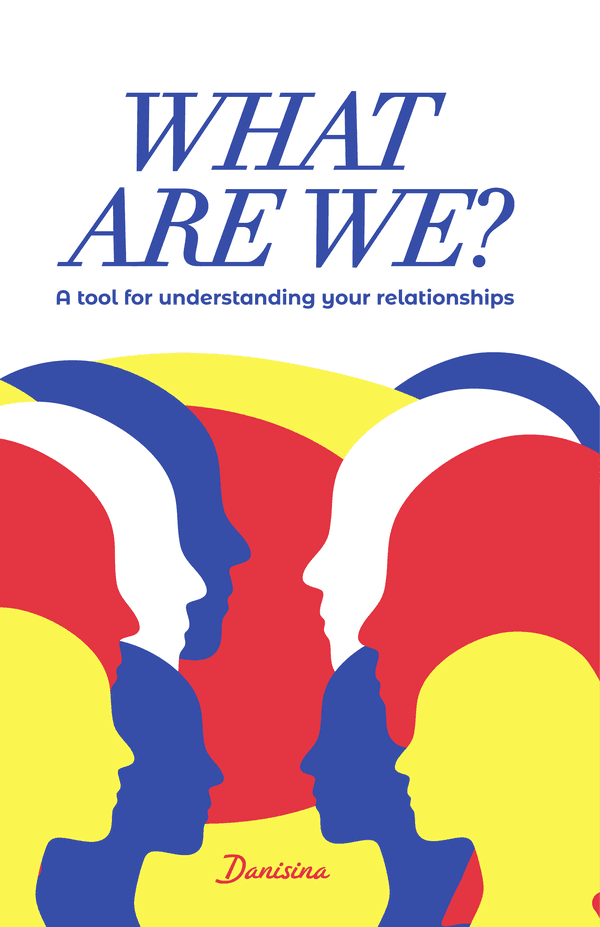
"What Are We?"
The book that started as a question and became a language.
Every connection you've struggled to name. Every bond you've dismissed for not fitting a role. Every relationship you knew mattered — but couldn't explain why.
This book gives you the words.
It walks you through twelve dimensions of connection, a visual mapping system, and a way of seeing relationships that changes how you hold every person in your life. With stories, diagrams, and reflective prompts so you can test the framework in your own life, right now.
You don't need any background in psychology or philosophy. You just need to be curious about the people around you.
Published in English and Spanish
across 13 international Amazon marketplaces
Under empirical academic validation
120-item psychometric instrument
Workshop series launching
Granada, Spring 2026
The living side of the framework
Personal essays about the connections that shape us. Cultural analysis through the lens of how we relate. Real stories. The kind that make you text someone you haven't talked to in months.
Subscribe on Substack